Jerusalem Old City has a total of 11 Gates, (Jerusalem�s gates) but only seven are open.
The core of Jerusalem, Old City, has a history that stretches back more than 3,000 years. The present street plan dates largely from Byzantine times, with the walls and ramparts dating back to the 16th century. The crossroad of three continents, Jerusalem has been one of the most fought over cities in human history. Within the walls, the Old City is divided into four vaguely defined quarters: Christian, Armenian, Jewish and Muslim.
You do not need to be Jewish, Christian, or Muslim, or even be overly concerned with religion, to be overwhelmed. Anyone with a sense of history, spirituality or the human species should be absorbed by the tremendous weight of human civilization that cloaks nearly every part of the city. It is an inhabited, living city - not a deserted museum or monument. Humanity's passion play has been constant revival at this location for most of the length of recorded history.
The core of Jerusalem, Old City, has a history that stretches back more than 3,000 years. The present street plan dates largely from Byzantine times, with the walls and ramparts dating back to the 16th century. The crossroad of three continents, Jerusalem has been one of the most fought over cities in human history. Within the walls, the Old City is divided into four vaguely defined quarters: Christian, Armenian, Jewish and Muslim.
You do not need to be Jewish, Christian, or Muslim, or even be overly concerned with religion, to be overwhelmed. Anyone with a sense of history, spirituality or the human species should be absorbed by the tremendous weight of human civilization that cloaks nearly every part of the city. It is an inhabited, living city - not a deserted museum or monument. Humanity's passion play has been constant revival at this location for most of the length of recorded history.
The Old City of Jerusalem its Walls and Gates. Jerusalem's Old City is a 0.9 square kilometer (0.35 square mile) area of the modern day city of Jerusalem Until the 1860s this area constituted the entire city of Jerusalem. The Jerusalem Old City was added to the UNESCO World Heritage Site List in 1981 and in 1982 it was added to the List of World Heritage in Danger.
The Old City of Jerusalem is home to several sites of key religious importance: the Temple Mount and its Western Wall for Jews, the Church of the Holy Sepulchre for Christians, and the Dome of the Rock and al-Aqsa Mosque for Muslims. There are four traditional quarters in the old city, though not everything falls neatly into these quarters. In order of size these are the Muslim Quarter, Christian Quarter, Jewish Quarter and Armenian Quarter.
No Tour in Israel is complete without a visit to Jerusalem's Walls. The walls you can see today around Jerusalem's old city were built by the Turkish sultan Suleiman the "Magnificent" during the years 1536-1541. The length of the wall is around 3.8 km.
No Tour in Israel is complete without a visit to Jerusalem's Walls. The walls you can see today around Jerusalem's old city were built by the Turkish sultan Suleiman the "Magnificent" during the years 1536-1541. The length of the wall is around 3.8 km.
Searches related to: Jerusalem Old City
Jaffa gate Jerusalem
Church of the Holy Sepulchre Jerusalem
Damascus gate Jerusalem
Mount of olives Jerusalem
Har Nof Jerusalem
Temple mount Jerusalem
Jewish quarter Jerusalem
Mount zion Jerusalem
Christian quarter old city Jerusalem
Jaffa gate Jerusalem
Church of the Holy Sepulchre Jerusalem
Damascus gate Jerusalem
Mount of olives Jerusalem
Har Nof Jerusalem
Temple mount Jerusalem
Jewish quarter Jerusalem
Mount zion Jerusalem
Christian quarter old city Jerusalem
Jerusalem Old City Sites
'Broad Wall' of the Israelite Period
Remnants of the wall King Chizkiyahu fortified in the 8th century BC to guard against the attack of Sanheriv, King of Assyria.
Batei Mahseh Square
The houses (Batei Mahse) encompassing the paved square were constructed between 1860 and 1890 by an association of Jews from Holland and Germany.
Chain of Generations Center
A new permanent exhibit called 'The Chain of Generations Center' has recently been opened near the Western Wall.
Church of the Redeemer
The northern portal of the Crusader church is incorporated in the modern church.
David's Tomb
Archeologists dispute the belief that this cave is the Tomb of King David, yet many believers still come here every day.
Davidson Center
The Archaeological Park is one of the largest, most significant archaeological sites in the country.
Dome of the Rock One of the holiest places to Islam.
Jerusalem old city map
The name ''The Old City,'' which in Jerusalem describes the area encompassed by the ''Old Walls'' is accessed by seven gates:
Jaffa Gate, Zion Gate, Dung Gate, Gate of Mercy, Gate of the Lions, Gate of the Flowers, the Shehem Gate, and the New Gate. It is customary to divide the interior of the walls into four neighborhoods that are named according to the demographics of their inhabitants: The Jewish Quarter, the Christian Quarter, the Armenian Quarter, and the Muslim Quarter. (It should be noted that the quarters are not the same size.) Temple Mount is situated within the borders of the Old City, though the walls that surround it are of a different period.
The ''Old City'' of Jerusalem includes sites holy to the three religions, the most renowned among them being Temple Mount, the Western Wall, the Al Aqsa Mosque, and the Church of the Holy Sepulcher.
From a historical perspective, the beginnings of Jerusalem were not in the Old City of today but in the City of David, located on the southern slope of Temple Mount, (today the City of David is outside the walls of the Old City) between the Kidron Valley and the Tyroppean Valley, also known as ''The Valley.'' Only in the days of King Hezekiah, out of a need to protect the inhabitants from the army of Eshor was the city expanded westward to what is today the ''Western Hill,'' commonly referred to as ''Mount Zion.''
Since then, the temples were built and destroyed and many other walls defining the boundaries of the old city were built and destroyed until the wall that we know today was built by Sultan Suleiman I. Indeed, for hundreds of years, until 1860, Jerusalem existed only within the boundaries of what became known at this point in time the ''Old City.''
Jaffa Gate, Zion Gate, Dung Gate, Gate of Mercy, Gate of the Lions, Gate of the Flowers, the Shehem Gate, and the New Gate. It is customary to divide the interior of the walls into four neighborhoods that are named according to the demographics of their inhabitants: The Jewish Quarter, the Christian Quarter, the Armenian Quarter, and the Muslim Quarter. (It should be noted that the quarters are not the same size.) Temple Mount is situated within the borders of the Old City, though the walls that surround it are of a different period.
The ''Old City'' of Jerusalem includes sites holy to the three religions, the most renowned among them being Temple Mount, the Western Wall, the Al Aqsa Mosque, and the Church of the Holy Sepulcher.
From a historical perspective, the beginnings of Jerusalem were not in the Old City of today but in the City of David, located on the southern slope of Temple Mount, (today the City of David is outside the walls of the Old City) between the Kidron Valley and the Tyroppean Valley, also known as ''The Valley.'' Only in the days of King Hezekiah, out of a need to protect the inhabitants from the army of Eshor was the city expanded westward to what is today the ''Western Hill,'' commonly referred to as ''Mount Zion.''
Since then, the temples were built and destroyed and many other walls defining the boundaries of the old city were built and destroyed until the wall that we know today was built by Sultan Suleiman I. Indeed, for hundreds of years, until 1860, Jerusalem existed only within the boundaries of what became known at this point in time the ''Old City.''
| • | Jerusalem Tours - Guide to Jerusalem, featuring up-to-date information on attractions, hotels, restaurants, nightlife, travel tips and more. |
| • | Jerusalem Atractions - |
| • | Jerusalem Real Estate |
| • | Car Rental Jerusalem - Jerusalempedia present a comprehensive directory of Jerusalem car rental companies. |
| • | Jerusalem News - Latest news from Jerusalem. |

The Arab market in the Old City of Jerusalem. By Ester Inbar

Old City of Jerusalem and its Walls.


Join the club. JerusalemPedia Club. Subscribe now

Old City of Jerusalem
Travel Partners

| Navigation |
| Main Page |
| Contemts |
| Random Article |
| Donate |
| Contact |
| Browse our free encyclopedia by alphabet: A B C D E F G H I J K L M N O P Q R S T U V W X Y Z |
| Join the Club for more information about Alcazar Hotel Jerusalem Log In |
| Join the Club - Advertise With Us - Contact Us - Links - Privacy Policy JERUSALEMPEDIA.All Rights Reserved. |
| The biggest Jerusalem content encyclopedia on the Internet. Jerusalempedia.com is a site that offers a full range of terms related to Jerusalem. Our Mission is to create the most comprehensive and definitive source of information available on Jerusalem anywhere. We are in the process of compiling the world's most comprehensive source of inter-related encyclopedic information sources covering every subject of Jerusalem to our visitors. |
Old City of Jerusalem and its Walls

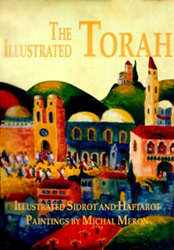
The Illustrated Torah - Chumash (Five Books of Moses)
Fully illustrated, colorful and attractive, and includes the weekly Torah portions and the Haftarot readings (weekly readings from the Writings and the Prophets).
Inside the Book
God said, "Let there be light"; and there was light.
Inside the Book
God said, "Let there be light"; and there was light.
List Price: US$60.00 Your Price: US$48.00 You save: 20%
